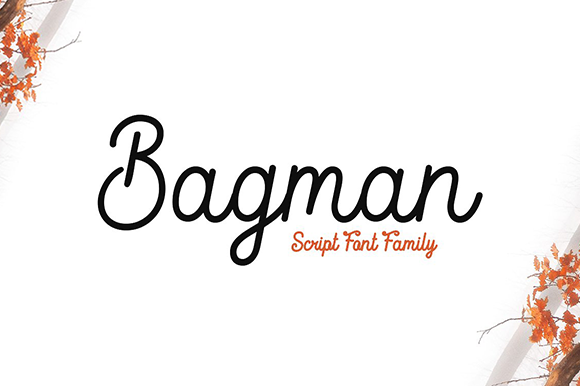
Bagman Font: Authentic Handwritten Style for Business
As a small business owner, you know that every visual touchpoint matters. From the logo on your storefront to the thank-you card tucked inside an online order, typography communicates your brand’s personality before a customer ever reads a single word. Finding a typeface that feels both professional and genuinely human can be a challenge, but Bagman offers a compelling solution. This lovely and bold handwritten font brings a unique authentic spin to design projects, helping independent creators and entrepreneurs establish a recognizable visual identity without sacrificing readability or commercial appeal.
Capturing Authenticity in Modern Branding
In a marketplace saturated with polished, minimalist aesthetics, many customers are craving connection and warmth. Bagman fits perfectly into this shift toward modern typography that feels personal. Unlike standard script fonts that can sometimes look overly formal or digitally perfect, Bagman retains the charming imperfections of genuine handwriting. Its bold weight ensures it holds its own as a display font, while its fluid strokes convey approachability and creativity.
For boutique owners, café operators, and handmade sellers, this balance is crucial. You want your brand identity to feel curated but not corporate. Bagman acts as a creative font that signals artisanal quality and personal care. Whether you are launching a new line of organic skincare or rebranding a local coffee shop, this typeface helps bridge the gap between professional polish and heartfelt authenticity. It tells your audience that there are real people behind the business, which is often the deciding factor for customers choosing between similar products.
Practical Applications Across Business Touchpoints
A premium font is only valuable if it works across the diverse materials a small business needs daily. Bagman is versatile enough to serve as a cornerstone for various branding assets. Here is how you can practically apply this handwritten font to elevate your customer-facing materials:
- Logo Design and Signage: The bold nature of Bagman makes it an excellent candidate for primary logos. It has enough visual weight to remain legible on storefront windows, embroidered aprons, and website headers. For a bakery or florist, it instantly sets a welcoming tone.
- Packaging Design and Labels: Product labels have limited real estate, yet they must communicate luxury and trust. Using Bagman for product names or key descriptors on candle jars, soap boxes, or beverage bottles adds a bespoke feel that justifies a premium price point.
- Social Media Graphics: On platforms like Instagram and Pinterest, stopping the scroll is essential. Bagman works beautifully for quote overlays, announcement banners, and story highlights. Its distinct style creates visual consistency across your feed, making your content instantly recognizable even before users see your profile picture.
- Customer Experience Materials: Unboxing experiences drive loyalty. Printing "Thank You" notes, care instruction cards, or stickers in Bagman reinforces your brand voice at the moment of highest customer satisfaction. It transforms a transactional insert into a memorable keepsake.
- Menus and Price Lists: For hospitality businesses, using Bagman for section headers or signature dish names guides the eye and adds character to printed menus. It pairs well with simpler body text, creating a hierarchy that is both functional and aesthetically pleasing.
Strategic Font Pairing for Professional Results
While Bagman is a standout star, relying on a single decorative font for every element can overwhelm the viewer and hinder communication. Successful brand identity relies on effective font pairing. As a business owner, think of Bagman as your accent piece—the element that grabs attention and sets the mood—while other typefaces handle the heavy lifting of information delivery.
Pairing Bagman with a clean sans serif font is often the safest and most modern choice for small businesses. A geometric or neutral sans serif provides a stable foundation for body copy, website navigation, and fine print. The contrast between the expressive, organic lines of Bagman and the structured simplicity of a sans serif creates a dynamic visual tension that looks intentional and professional. Alternatively, pairing Bagman with a classic serif font can evoke a more traditional, heritage-inspired aesthetic, which works wonderfully for law firms, coaching practices, or high-end retail boutiques.
When designing marketing materials, use Bagman for headlines, calls to action, and short phrases. Reserve your supporting typeface for paragraphs, pricing details, and contact information. This hierarchy ensures your designs are not only beautiful but also accessible and easy to navigate for potential customers.
Readability and Real-World Testing
Aesthetics should never compromise function. Before committing Bagman to a large print run or a permanent website redesign, conduct practical readability tests. Handwritten fonts can sometimes lose clarity at very small sizes or on low-resolution screens. Print out your product labels at actual size to ensure the ink doesn't bleed and the letters remain distinct. View your social media templates on a mobile device to confirm that the text is legible against busy backgrounds.
If you find that Bagman becomes difficult to read below a certain point size, do not force it. Instead, reserve it for larger applications where its bold personality can shine, and switch to a highly legible alternative for micro-copy. Remember, the goal of commercial typography is to facilitate understanding, not just to decorate. Trustworthy brands prioritize their customers' ease of access over stylistic purity.
Navigating Commercial Licensing for Entrepreneurs
One of the most critical aspects of using any creative font for business is understanding licensing. As an entrepreneur, protecting your brand from legal issues is as important as the design itself. Before using Bagman on products, packaging, templates, merchandise, or client work, always verify the specific commercial license terms provided by the foundry or marketplace.
Licensing for Fonts can vary significantly. Some licenses cover basic desktop use for marketing materials and web graphics, while others require extended licenses for items intended for resale, such as printed t-shirts, mugs, or digital templates sold to other designers. If you plan to use Bagman in a logo that will be trademarked, or if you anticipate high-volume production, check whether an upgrade is necessary. Investing in the correct commercial font license upfront prevents costly rebranding efforts later and ensures you are ethically compensating the type designer for their craft. Treat font licensing as a standard business expense, just like purchasing inventory or paying for hosting.
Building a Cohesive Visual Identity
Ultimately, Bagman is more than just a collection of letterforms; it is a tool for storytelling. For small business owners, consistency builds trust. When your email newsletters, product packaging, and social media posts all share the same typographic DNA, you create a seamless experience that reinforces brand recall. Bagman’s unique authentic spin allows you to stand out in crowded categories like Script Amp without looking generic.
Start by integrating this typeface into one or two key areas, such as your Instagram highlight covers or your next product launch label. Gather feedback from loyal customers and observe how it performs in real-world settings. Does it align with the feedback you receive about your brand's vibe? Do customers comment on the packaging? Use these insights to refine your usage. By treating typography as a strategic business asset rather than an afterthought, you leverage the full power of design to grow your enterprise. Bagman offers the perfect blend of boldness and warmth to help your small business look established, professional, and unmistakably yours.